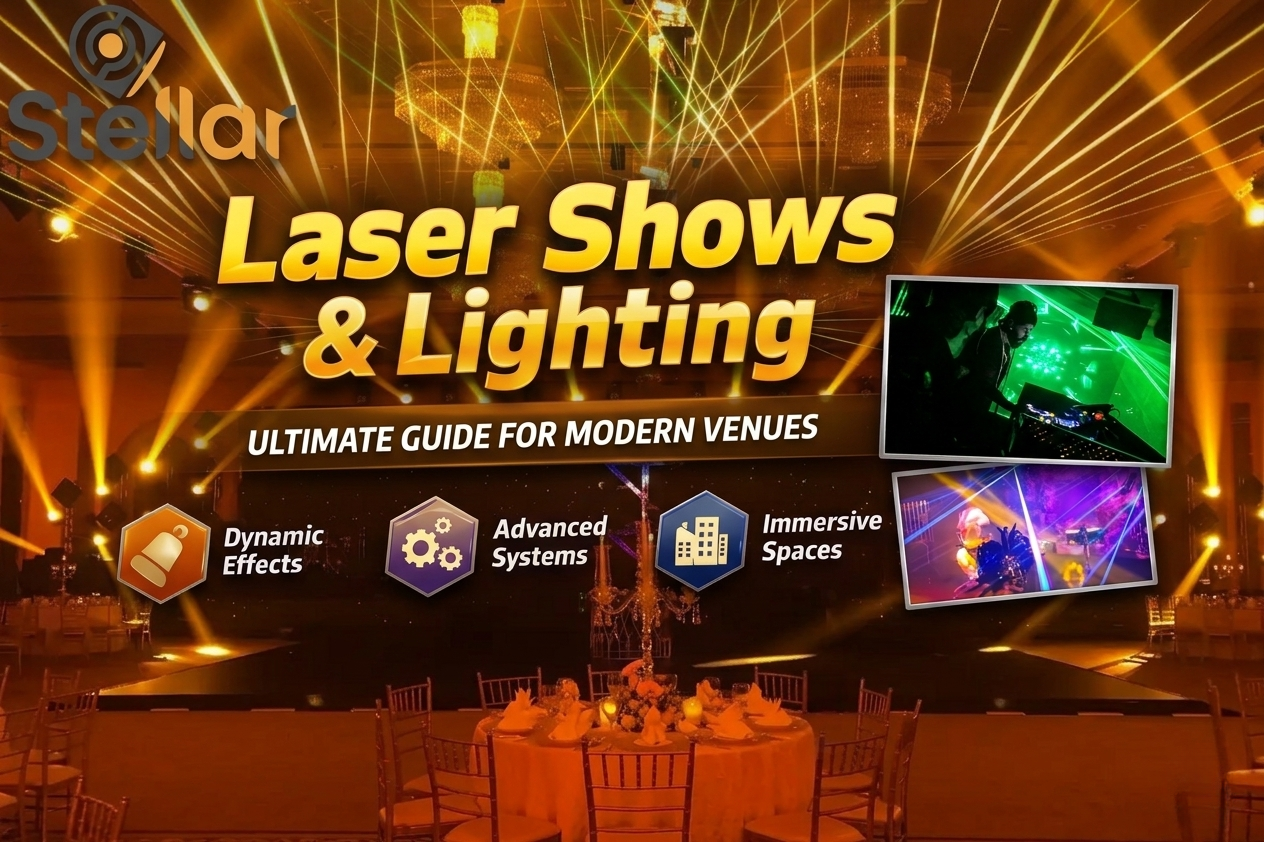
Laser Shows and Lighting: Ultimate Guide for Modern Venues
Introduction
In today’s experience-driven world, lighting is no longer just functional—it’s transformational.
Whether it’s a high-energy nightclub in Dubai, a corporate auditorium, or an immersive experience center, laser shows and lighting systems define how people feel, engage, and remember a space.
However, most venues still struggle with outdated setups, poor system integration, or temporary solutions that fail under real-world conditions.
This is where Stellar Show stands out—delivering engineered, long-term lighting solutions designed not just to impress, but to perform consistently.
What Are Laser Shows and Lighting?
Laser shows and lighting are advanced visual systems that use laser technology and intelligent lighting fixtures to create immersive, synchronized environments across entertainment and architectural spaces.
In Simple Terms:
- Laser Shows → High-intensity beams for aerial effects, graphics, and visual impact
- Lighting Systems → Programmable fixtures controlling color, movement, and intensity
Together, they create dynamic environments used in:
- Nightclubs and live music venues
- Auditoriums and theatres
- Architectural and facade lighting
- Experience centers and hospitality spaces
Why Laser Shows and Lighting Matter
Modern audiences expect immersive environments—not just events.
Key Benefits
1. Enhanced Audience Engagement
Lighting directly affects attention, emotion, and energy levels, making experiences more memorable.
2. Strong Brand Identity
Architectural and entertainment lighting shapes how a venue is perceived and remembered.
3. Multi-Functional Use
One system can support:
- Events
- Performances
- Presentations
- Ambient environments
4. Seamless Technology Integration
Modern laser lighting systems integrate with audio, video, and automation for real-time synchronization.
How Laser Shows and Lighting Work
Core Components
1. Laser Systems
Used for beam effects, aerial visuals, and projections.
2. Intelligent Lighting Fixtures
Includes moving heads, wash lights, and spotlights controlled via DMX.
3. Control Systems
Software-based programming that manages scenes, automation, and synchronization.
4. Rigging & Trussing
Ensures safe installation with proper load calculations and structural support.
5. Integration Layer
Connects lighting with audio and media systems for synchronized performance.
System Workflow
- Space analysis and design planning
- Fixture selection and placement
- System installation and alignment
- Programming and synchronization
- Testing and final calibration
👉 Result: A fully immersive, performance-ready environment.
Real-World Applications
Nightclub Lighting Systems
- Beat-synced laser effects
- High-energy dynamic visuals
Auditorium Lighting Design
- Scene-based lighting control
- Professional presentation environments
Architectural Lighting Solutions
- Facade illumination
- Permanent installations enhancing design
Hospitality & Experience Spaces
- Ambient + interactive lighting
- Enhanced guest experience
Laser Lighting vs Traditional Lighting
|
Feature |
Laser Lighting |
Traditional Lighting |
|
Visual Impact |
High (beams, effects) |
Moderate |
|
Control |
Advanced programmable |
Limited |
|
Synchronization |
Real-time with audio/video |
Basic |
|
Use Case |
Entertainment & immersive |
General illumination |
👉 Modern venues require a combination of both for optimal results.
Key Considerations Before Installation
1. Purpose of the Space
Define whether it’s for entertainment, architectural, or multi-use.
2. Scalability
Ensure the system can adapt to future upgrades.
3. Environmental Conditions
In GCC regions:
- High heat
- Dust exposure
- Continuous operation
4. Ease of Use
Systems should be operable by non-technical staff.
5. Safety & Compliance
Includes certified rigging, load calculations, and international standards.
Industry Insight: Why Lighting Systems Fail in Most Venues
Many lighting systems underperform due to:
- Poor design planning
- Lack of integration with audio/architecture
- Use of low-quality components
- Ignoring environmental conditions
- No long-term maintenance strategy
👉 The result: inconsistent performance and higher long-term costs.
Why Choose Stellar Show for Laser Shows and Lighting in GCC?
When performance, reliability, and long-term value matter, Stellar Show delivers engineered solutions tailored for real-world environments.
What Makes Stellar Show Different
✔ Engineering-driven system design
✔ Complete integration (lighting + rigging + control)
✔ Consistent execution across all project sizes
✔ Built for GCC climate conditions
✔ Long-term reliability and performance focus
Unlike temporary setups, Stellar Show ensures systems remain reliable, scalable, and efficient over time.
Best Practices for High-Performance Lighting Systems
- Start with design, not equipment
- Ensure full system integration
- Prioritize usability
- Invest in quality components
- Plan for scalability and future expansion
Future Trends in Laser Shows and Lighting
- AI-driven lighting automation
- Interactive and immersive environments
- Integration with AR/VR
- Energy-efficient systems
- Real-time adaptive lighting
👉 The future is not just lighting—it’s experience engineering.
FAQs
1. What are laser shows and lighting systems used for?
Laser shows and lighting systems are used to create immersive visual environments in venues like nightclubs, auditoriums, and architectural spaces. They enhance engagement, improve ambiance, and enable synchronized experiences with audio and media systems.
2. How do laser lighting systems work?
Laser lighting systems use high-intensity beams controlled through software to create effects, patterns, and synchronized visuals. These systems can align with music or pre-programmed scenes for dynamic experiences.
3. Are laser lighting systems suitable for GCC environments?
Yes, when designed properly. Professional systems are built to withstand high temperatures, dust, and continuous operation, making them suitable for GCC conditions.
4. What is the difference between laser lighting and stage lighting?
Laser lighting creates visual effects using beams and projections, while stage lighting focuses on illuminating performers and spaces. Both work together for a complete lighting setup.
5. How do I choose the right lighting solution provider?
Choose a provider that focuses on engineering, integration, safety, and long-term performance rather than just equipment supply.
Ready to Transform Your Space?
If you’re planning to upgrade your venue or build a new experience, investing in the right laser shows and lighting system is essential.
Instead of short-term fixes, choose a solution designed for performance, reliability, and long-term value.
👉 Connect with Stellar Show to explore how your space can become a fully immersive environment.